
Unlocking the Secret to Transforming Workplace Culture through Mindfulness and Meditation
Enhancing Mindfulness and Meditation in the Workplace
In our quest for a more holistic approach to leadership, the practice of mindfulness and meditation emerges as a transformative tool. Picture a workplace where individuals are not merely employees, but conscious beings, engaged in their tasks with clarity and purpose. In an environment where stress is tangible and deadlines loom, how can leaders foster a space that nurtures focus amidst chaos? Integrating mindfulness and meditation into the daily routine not only bolsters individual well-being but enhances team cohesion, productivity, and overall organisational health.
The Essence of Mindfulness
At its heart, mindfulness involves paying attention to the present moment without judgement. It’s about tuning into our thoughts, feelings, and sensations without getting carried away by them. This practice can be as straightforward as taking a few deep breaths, observing one’s surroundings, or engaging fully in conversations. In the context of leadership, practising mindfulness cultivates self-awareness—a vital trait for any leader. When leaders model such behaviour, they set the tone for the entire organisation, encouraging employees to adopt similar practices.
Mindfulness has profound implications for stress reduction. Research has shown that consistent mindfulness practice helps to decrease anxiety, depression, and emotional exhaustion (Gupta, Kumar, & Singh, 2014). By providing employees with tools and techniques to manage their stress, leaders create an atmosphere of well-being that nourishes creativity and innovation. It’s rather like tending to a garden; if you nurture it with the right amount of care, it flourishes.
Benefits of Meditation in the Workplace
Meditation brings additional layers of depth to workplace wellness initiatives. A study conducted by Karakas (2010) indicated that spiritual leadership, underscored by practices such as meditation, positively affects employee performance and job satisfaction. Imagine a five-minute meditation session before meetings, where participants can centre themselves and approach discussions with an open mind and heart. The results are often tangible: enhanced focus, improved interpersonal relationships, and a deeper sense of connection to one another and the work being done.
Moreover, meditation fosters a culture of compassion and understanding. By cultivating mindfulness practices, leaders enable employees to develop empathy, allowing them to better navigate interpersonal dynamics and contribute positively to a collaborative environment. We are reminded that workplace interactions are not merely transactional; they are relational, and nurturing a compassionate culture is essential for sustainability.
Integrating Mindfulness and Meditation into the Workday
Creating a culture of mindfulness and meditation doesn’t require monumental changes but rather a commitment to small, consistent practices. Here are some actionable steps leaders can take:
– Mindful Meetings: Begin meetings with a minute of silence or a guided meditation focusing on breathing. It helps participants enter the meeting with a clear mind.
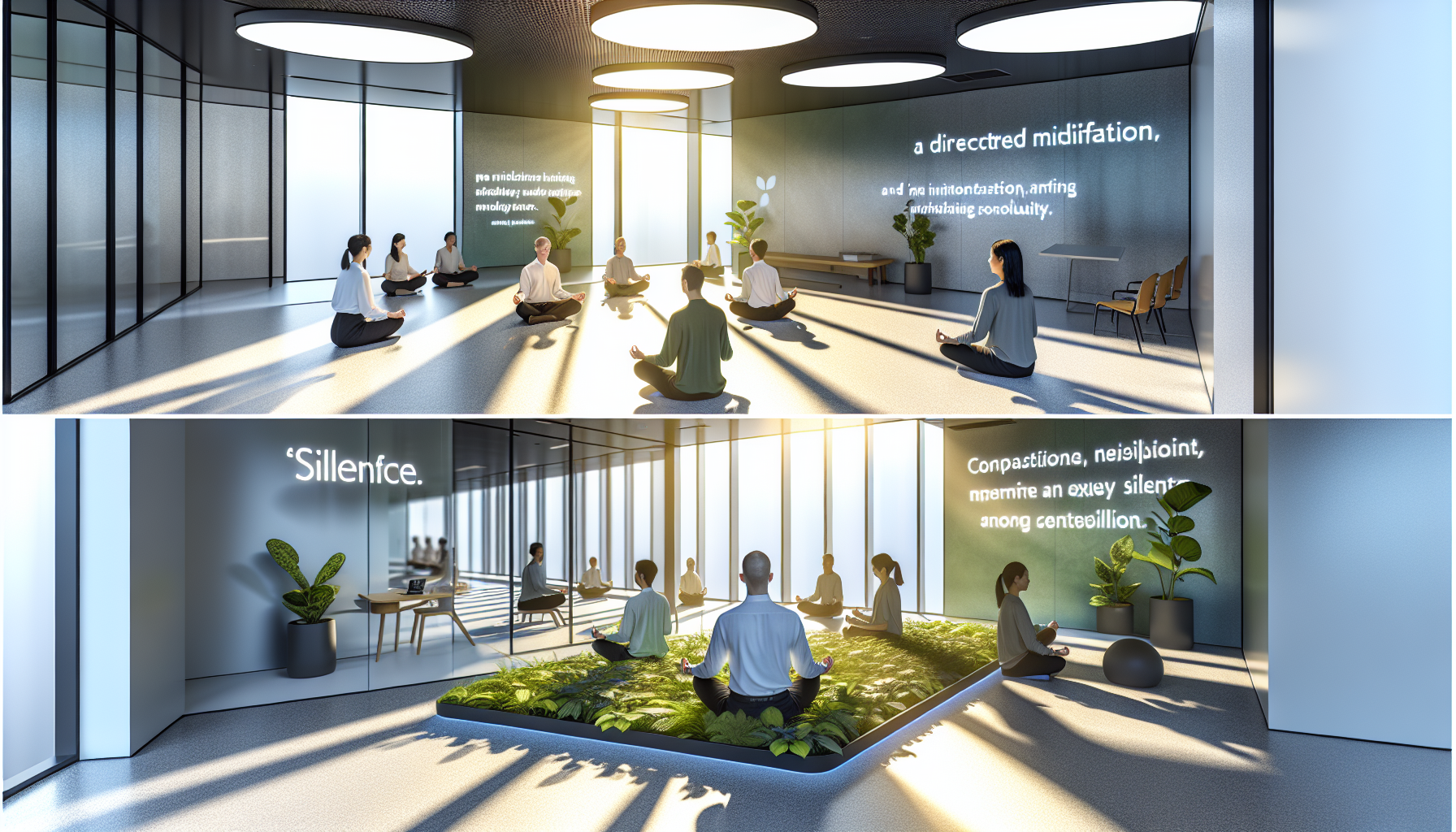
– Designated “Quiet” Spaces: Allocate areas in the office for meditation or quiet reflection, providing employees a sanctuary from the hustle and bustle of work.
– Daily Mindfulness Reminders: Share reminders or short tips about mindfulness through internal communications. Encouragement can be a simple message: “Take a deep breath; pause and reflect.”
– Workshops and Training: Host workshops led by mindfulness experts to teach employees about the benefits and techniques of meditation, allowing them to experience these practices in a structured setting.
– Encourage Breaks: Promote the importance of breaks, advocating for short intervals where employees can step away from their desks, stretch, or engage in mindfulness exercises.
Every small step contributes to a cultural shift where mindfulness and meditation become integral to daily activities, creating a ripple effect that positively influences the organisation.
A Leadership Model Empowered by Mindfulness
The essence of spiritual leadership lies in creating conditions where individuals feel empowered to lead themselves. Fry (2003) speaks of spiritual leadership as a model that fosters a vision and a sense of belonging among followers. When leaders embrace mindfulness and meditation, they embody the principles of compassion, integrity, and authenticity. This, in turn, cultivates an environment where employees feel valued and inspired.
It’s vital to recognise that the benefits of mindfulness and meditation extend beyond individual well-being. They also impact the broader organisational landscape. Teams that practise mindfulness together create stronger bonds and understand one another’s perspectives. As colleagues become more self-aware, they can interact with greater emotional intelligence, leading to enhanced cooperation and collaboration.
Moreover, as we start prioritising mental health through these practices, we inevitably contribute to the sustainability of our organisations. A workforce that is emotionally and mentally balanced can adapt more readily to challenges and changes in the environment. They are not only more productive but also more innovative, providing a competitive edge in the evolving market.
Challenges and Solutions
While integrating mindfulness and meditation into the workplace is beneficial, there may be resistance from employees who view these practices as unnecessary or frivolous. Here, transparency is key. Leaders should communicate the evidence backing these practices to enhance understanding and promote buy-in.
Another challenge could be the perceived lack of time. In a busy workplace, carving out moments for mindfulness can feel daunting. Yet, the irony is that taking time for mindful practice often leads to increased efficiency and effectiveness. Encouraging short, manageable sessions rather than lengthy retreats can help to integrate mindfulness seamlessly into daily routines.
Allowing for flexibility and accommodating individual preferences regarding mindfulness practices can also foster greater participation. Some may prefer group meditations, while others may thrive with solo practice or quiet reflection.
The Path to Transformation
In essence, integrating mindfulness and meditation practices into the workplace serves as a catalyst for personal and organisational transformation. Leaders who embrace these practices not only amplify their own self-awareness and emotional intelligence but also inspire their teams to engage in a shared journey of mindfulness.
When every employee feels equipped to take charge of their well-being and contribute positively to the workplace, the organisation evolves into a thriving ecosystem of support and innovation. Rather than merely existing in the professional sphere, individuals become active participants in a holistic workplace culture that values and prioritises well-being.
As we look ahead, envision the potential unfolds when mindfulness is woven into the fabric of our everyday working lives. We hold the keys to a brighter, more compassionate future, ripe with opportunities for growth, achievement, and authenticity.
In Conclusion
The journey of integrating mindfulness and meditation into our workplaces requires conscious effort and dedication; yet, the rewards far outweigh the challenges. By nurturing our own mindfulness practices, we model the way for others, turning the workplace into a sanctuary of peace and creativity. With every breath taken, we are one step closer to an engaged, fulfilled, and deeply connected workforce that embodies the essence of compassionate leadership.
Let us embrace the transformative power of mindfulness and meditation as we build not just successful businesses, but thriving communities where each individual is seen, heard, and valued for their unique contributions.
Bibliography
Fry, L. W. (2003). Toward a theory of spiritual leadership. The Leadership Quarterly, 14(6), 693-727. https://doi.org/10.1016/j.leaqua.2003.09.001
Gupta, M., Kumar, V., & Singh, M. (2014). Creating satisfied employees through workplace spirituality: A study of the private insurance sector in Punjab (India). Journal of Business Ethics, 122(1), 79-88. https://ideas.repec.org/a/kap/jbuset/v122y2014i1p79-88.html
Karakas, F. (2010). Spirituality and performance in organizations: A literature review. Journal of Business Ethics, 94(1), 89-106. https://link.springer.com/article/10.1007/s10551-009-0251-5


About Post Author
